Force Fields
Scopri di più su questa tecnica Find out more about this technique
Le immagini sono accurate, e riflettono fedelmente l'originale, ma se l'opera che vi arriva dovesse discostarsi da quanto vi aspettavate potete restituirla, ed io vi restituirò l'importo. L’opera verrà spedita con un imballaggio accurato, per evitare ammaccature. Ogni opera sarà accompagnata da una scheda tecnica firmata dall'artista dove sarà specificata la tecnica e la tiratura; Le opere stampate a mano saranno contrassegnata da un timbro a secco dell'autrice. Dal momento dell'acquisto ho bisogno di circa una settimana per confezionare l'opera e spedirla, ma cercherò di fare anche prima. All'acquisto seguirà fattura elettronica, come per legge. Mi serviranno quindi il vostro nome, cognome, indirizzo e codice fiscale, nonché una mail a cui spedire la fattura di cortesia.
The images are accurate, and faithfully reflect the original, but if the work you receive deviates from what you expected, you can return it, and I will return the amount. The images are accurate, and faithfully reflect the original, but if the work that comes to you deviates from what you expected you can return it, and I will return the amount; the work will be shipped with careful packaging, to avoid dents. Each work will be accompanied by a technical sheet signed by the artist where the technique and print run will be specified; hand-printed works will be marked with a dry stamp from the author. From the moment of purchase I need about a week to package the work and ship it, but I will try to do it even sooner.The purchase will be followed by an electronic invoice, as per law. I will then need your name, surname, address and tax code, as well as an email to send the courtesy invoice to.
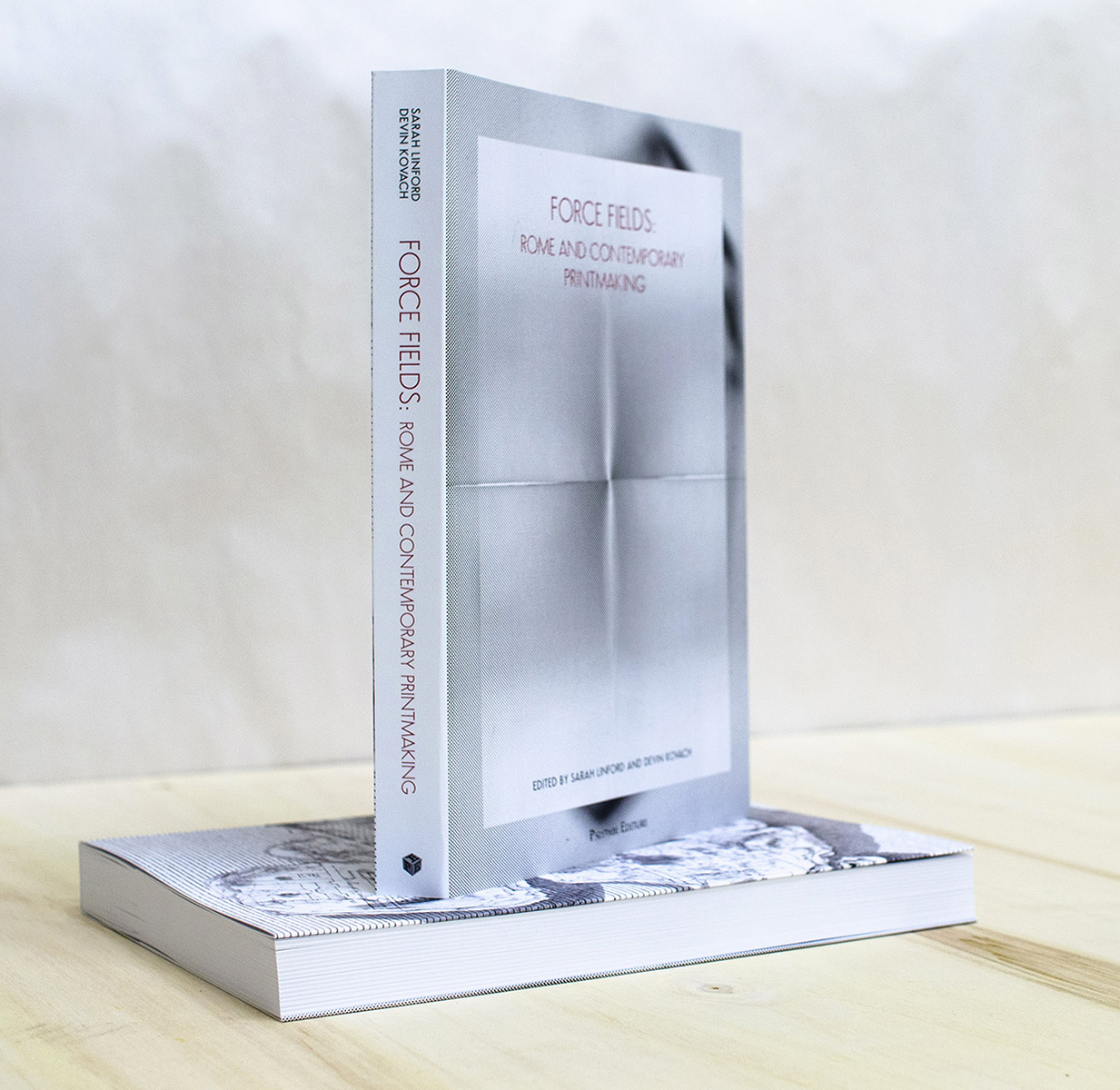
 FORCE FIELDS: Rome and Contemporary Printmaking is both a sourcebook on the capital role that Rome has played in the history of printmaking and a state-of-the-field of contemporary practices. The volume features diverse academic, professional, and artistic perspectives that illuminate the evolution of and recent shifts in making and diffusing prints in Rome. Leading experts retrace the history of prints from the Renaissance to the current day; Roman master printers recount experiences working with some of the artists who define twentieth-century art; and a richly illustrated catalogue of contemporary works, by locally trained and international artists drawn to Rome, introduces the varied conceptions — and force fields — operative in printmaking today. This volume will delight anyone interested in printmaking (specialists and non-specialists), inform those curious about Rome’s past and present role in the visual arts, and serve as a reference book for printmakers and critical historians.
I am at heart an illustrator. I like to represent. Working through the many materials and procedures of intaglio printmaking modifies what I initially visualize. When I have finished working on the matrix, I consider the infinite possibilities for experimentation during the printing stage and enjoy exploring the many outcomes. I like to test things out and try different variations. My idea evolves into something more poetic and expressive as I go through the printmaking process, which is always interesting, creative, and unpredictable.
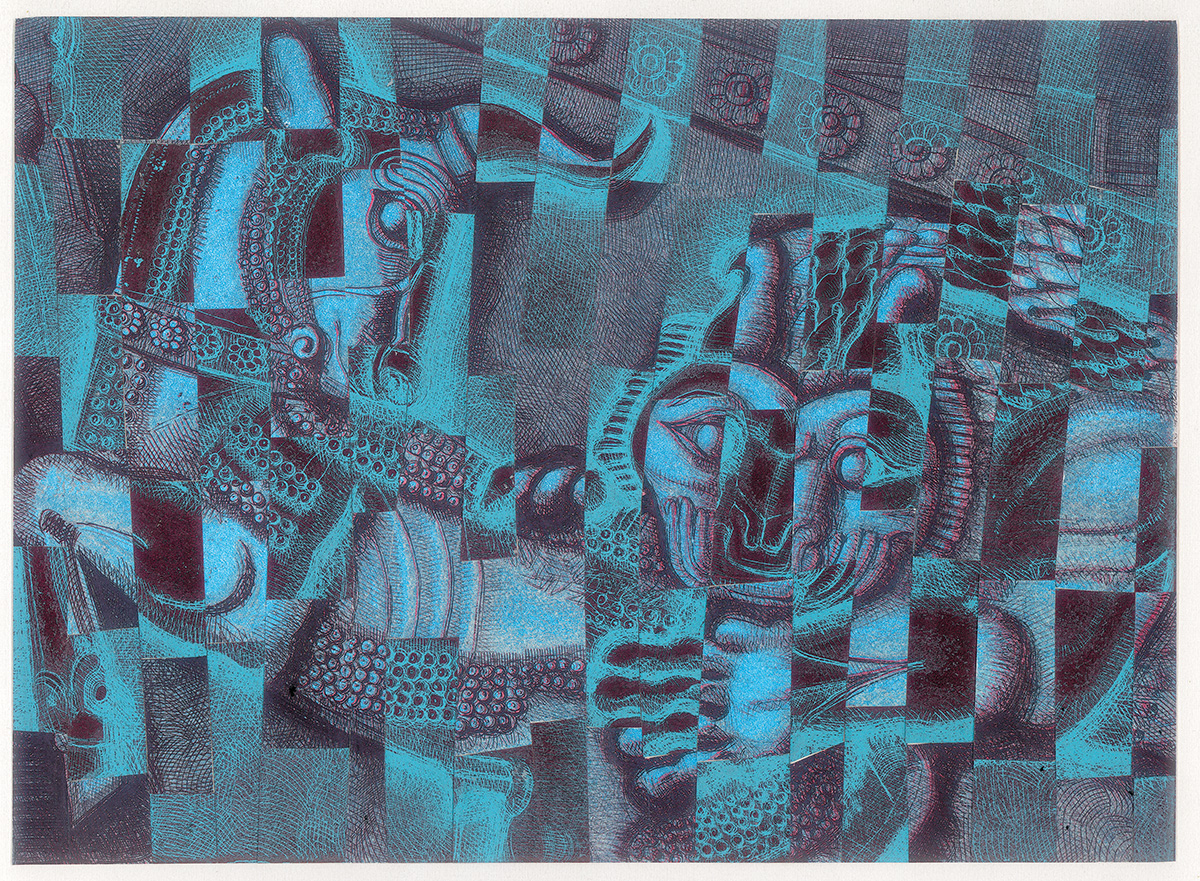
“Persepolis” is a research that starts from a traditional black and white print, and develops a chromatic research, playing on the multiple printing of two matrices; one made in etching and the other in aquatint. I reinterpreted a classic subject (a bas-relief of the archaeological site of Persepolis, traditionally represented in black and white) developing it in a wide range of colors and combinations, up to an alternating combination of two prints, collaged. One the inverse of the other, one printed chalcographically (dark subject on light background), and the other printed typographically (light subject on dark background).

Catalogue “Multiple”; artist’s books from the collection of the National Bibiloteca of Luxembourg
2020
Guarda il progetto Discover